
9th EWC User Workshop 2026, Darmstadt
7, October, 2026
·3 minutes read
·
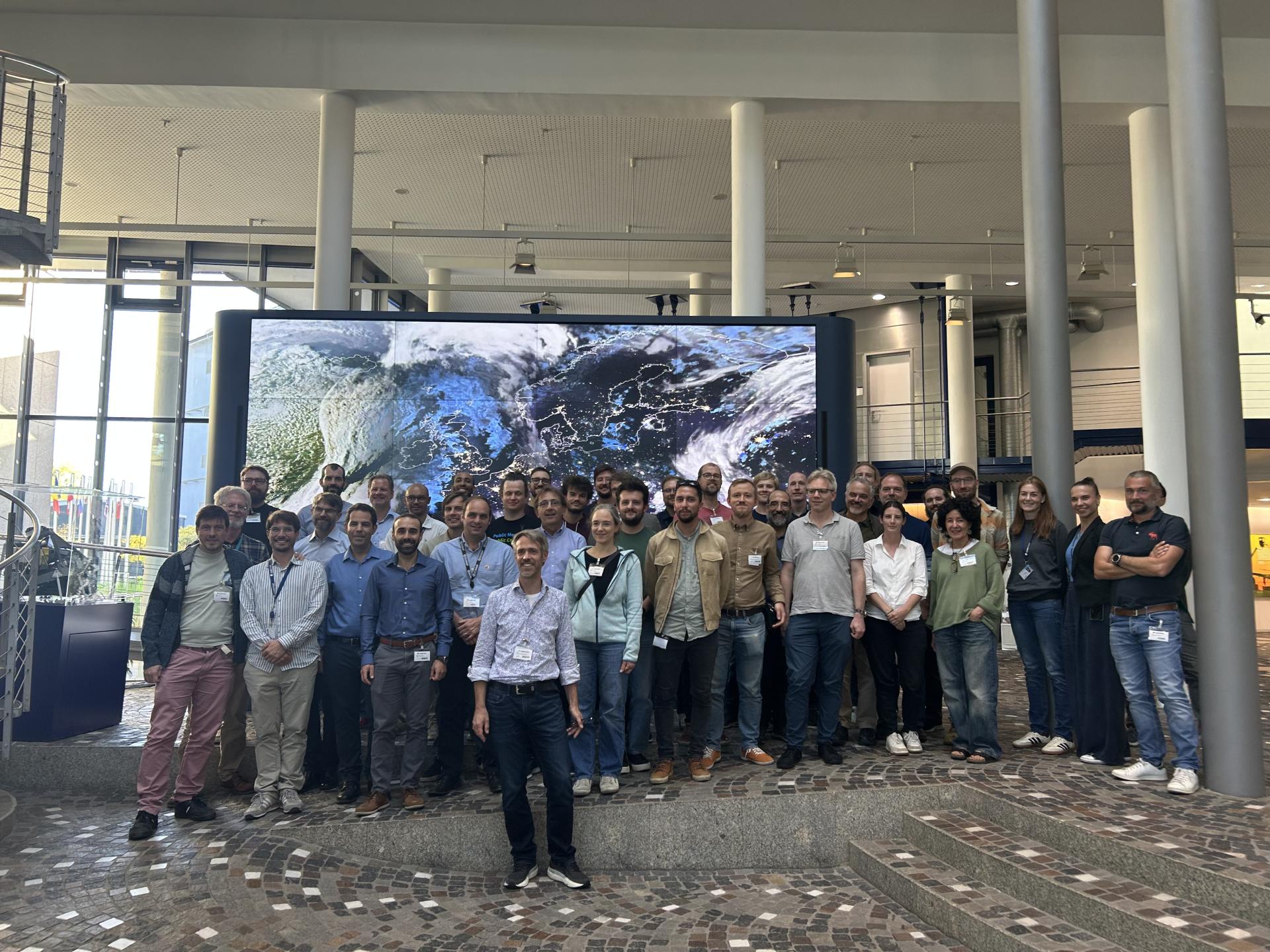

The 9th European Weather Cloud (EWC) User Workshop was held on 22 September 2026 in Darmstadt, bringing together users, developers, and service providers to share experiences and learn from each other. It was also an opportunity to look back at how the EWC has grown and to look ahead at how it will continue to support the meteorological community in Europe. The workshop provided an occasion to exchange, showcase applications running on the EWC, discuss future priorities, and strengthen collaboration between EWC users and service providers.
This year’s event gathered 95 participants from 27 countries, with 47 attending in person and 48 joining remotely. The workshop continued its successful hybrid format, enabling broad participation from across Europe while enabling face-to-face discussion and networking.
The day began with updates from the EWC teams on the service roadmap and portfolio. Participants were introduced to recently launched services, including OpenStack Horizon and EWC IAM, as well as two new pilot services: EWC Secret Management and the EWC Container Registry. Updates were also provided on the Managed Kubernetes offering and the continuously growing Community Hub. These developments highlighted the ongoing efforts to simplify access to cloud services, strengthen security, and support modern cloud-native workflows across the EWC ecosystem.
The workshop’s central focus was on presentations delivered by EWC users, showcasing their work and experiences. User presentations demonstrated a broad range of applications running on EWC infrastructure, from AI and machine-learning initiatives such as MLCast, KAL, and AI-based forecast visualisation systems, to climate research activities, including heat-wave analysis, atmospheric composition research, satellite data processing workflows, and finally Community Hub applications such as GeoWeb and FLEXPART-IFS. Together, these examples show the versatility of the EWC and its growing role as a shared platform supporting research, innovation, and operational activities across the EWC Community.
The workshop also provided valuable opportunities to gather feedback directly from users. Discussions around Object Storage services highlighted requests for clearer documentation on bucket policies, access control, storage quotas, and S3 access logging. Participants also expressed interest in self-service management of S3 access keys. Feedback on the Community Hub focused on the need for additional end-to-end examples, practical user journeys, and reusable AI and machine-learning deployment scenarios. Security-related discussions identified demand for improved application security guidance and vulnerability notifications for container images. Across the machine-learning community, users expressed interest in GPU-enabled workflows, automated deployment pipelines and additional reference architectures and user stories.
The workshop concluded with an open discussion on future priorities for the EWC. Participants highlighted the need for greater integration across EWC services and infrastructures, with the EWC CLI viewed as a key tool for improving the user experience. There was also strong interest in centrally managed DevOps services, AI-assisted operations, and continued community involvement in shaping future developments.
At the end of the day, participants were invited to visit EUMETSAT’s mission control centre, where experts provided an overview of the organisation’s satellite programmes and operational activities. Participants continued with a tour of the satellite models and learn directly from instrument specialists about the capabilities and applications of the sensors that support weather forecasting, climate monitoring, and Earth observation across Europe.
If you missed it or you would like to go back to some of the presentations, you may find all the material and recordings at Week: EWC User Workshop 2026 | European Weather Cloud | EUMETSAT.