Hybrid Machine Learning Framework
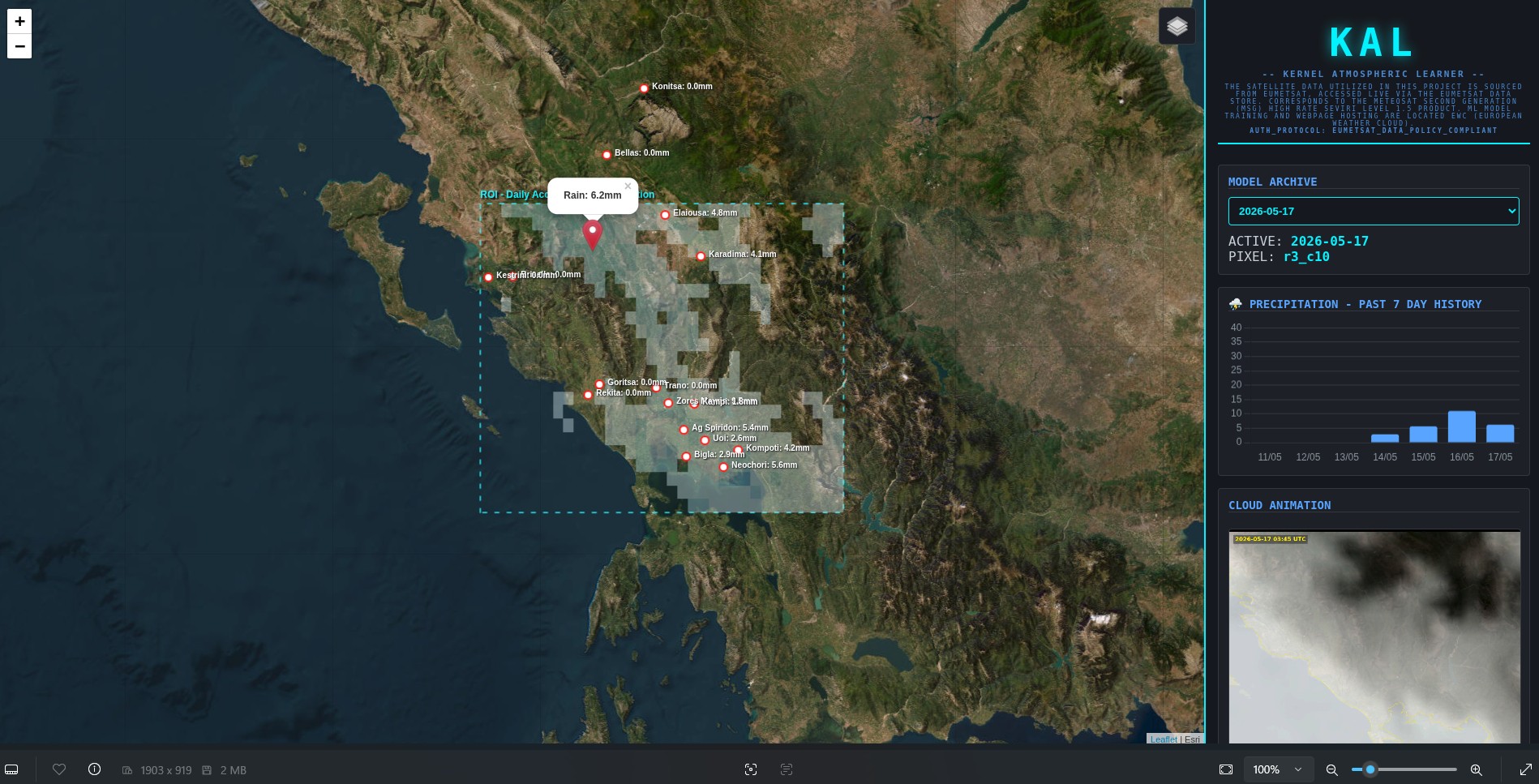
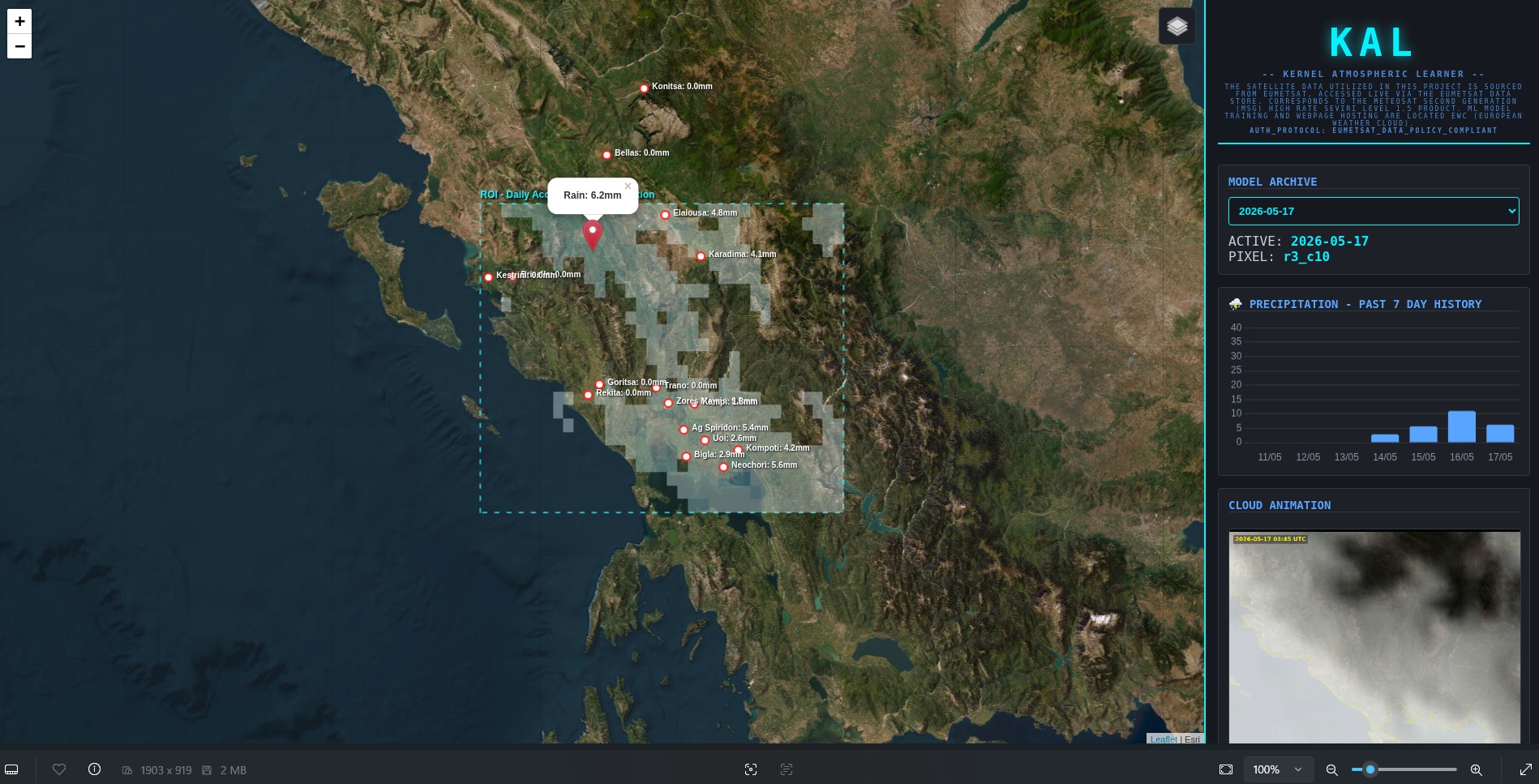
KAL (Kernel Atmospheric Learner) is a hybrid machine learning framework, developed and trained on the European Weather Cloud (EWC), for high-resolution daily Quantitative Precipitation Estimation (QPE) in topographically complex regions that lack ground-based weather radar.
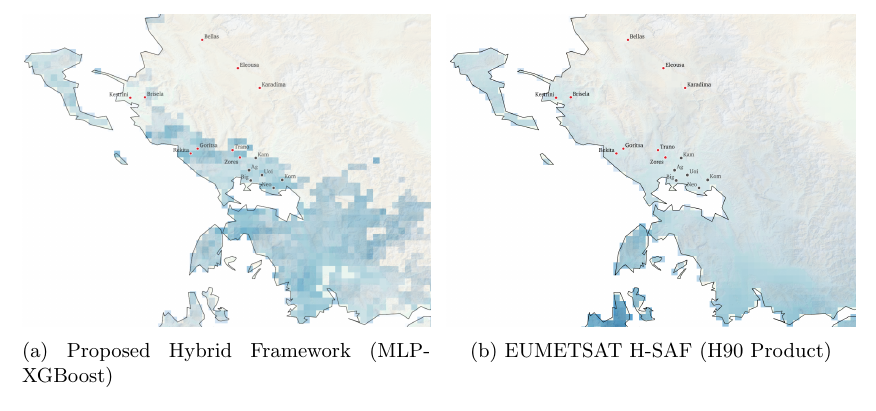
The framework combines a 10-year archive of Meteosat Second Generation (MSG) SEVIRI multispectral observations with Copernicus DEM topographic metadata and applies a two-stage "Hurdle" architecture: a Deep Multi-Layer Perceptron (Keras/TensorFlow) for binary rainfall detection, followed by an XGBoost regressor for precipitation intensity quantification. This design directly addresses the strong zero-inflation bias typical of Mediterranean rainfall data.
Ground truth was provided by rain gauge data from the agrometeorological station network of the University of Ioannina (UoI). The framework was validated using a Leave-One-Station-Out (LOSO) cross-validation strategy against six agrometeorological rain gauge stations in the Arta plain (Epirus, Greece), achieving a mean F1-score of 0.796 and a Critical Success Index of 0.663 for nighttime events, and a mean Kling-Gupta Efficiency of 0.658.