
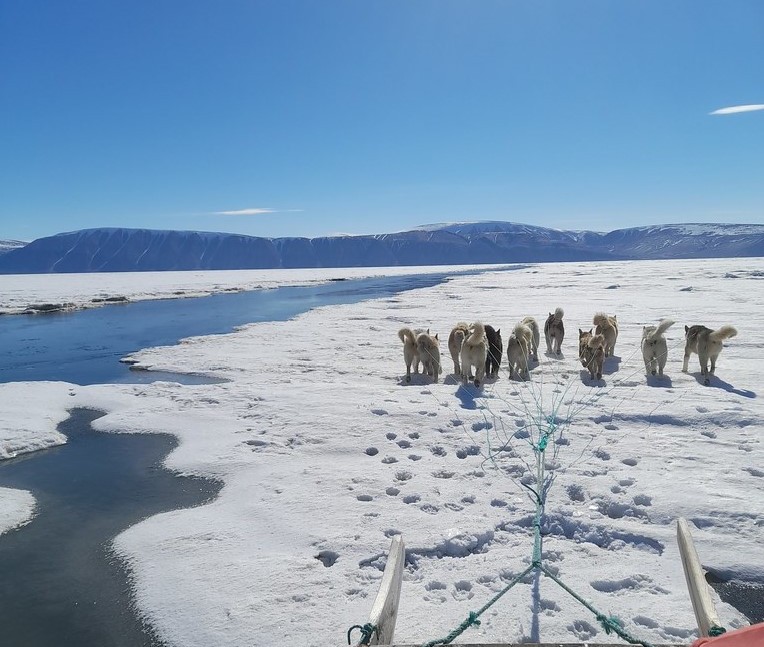
GRL landscape

Machine Learning Emulation to accelerate Climate Science

Emulating Greenland Ice Sheet Melt & Runoff

The Challenge

The Greenland ice sheet is a critical component of Earth's climate system. As surface melt and meltwater runoff increase, they directly impact surface mass balance (SMB) and contribute to rising sea levels. Understanding and projecting these changes is essential for climate science and policy.

Traditionally, researchers use polar regional climate models (RCMs) coupled with firn models to estimate melt and runoff. However, these models face a significant challenge: SMB projections from different models vary dramatically by the end of the century, highlighting substantial uncertainty. While scientists need to evaluate climate sensitivity and quantify this uncertainty through large ensemble simulations, the computational expense of polar RCMs makes this practically impossible with traditional approaches.

The Solution: Machine Learning Emulators

Researchers at the Danish Meteorological Institute (DMI) are pioneering an innovative approach: creating Machine Learning (ML) emulators that can replicate the behavior of computationally expensive polar RCMs and firn models, but at a fraction of the computational cost. 

Their solution involves two complementary ML models: A ML-downscaling model to emulate the dynamical downscaling process, and a firn emulation model to calculate daily melt and runoff from the downscaled climate variables.
Neural Network
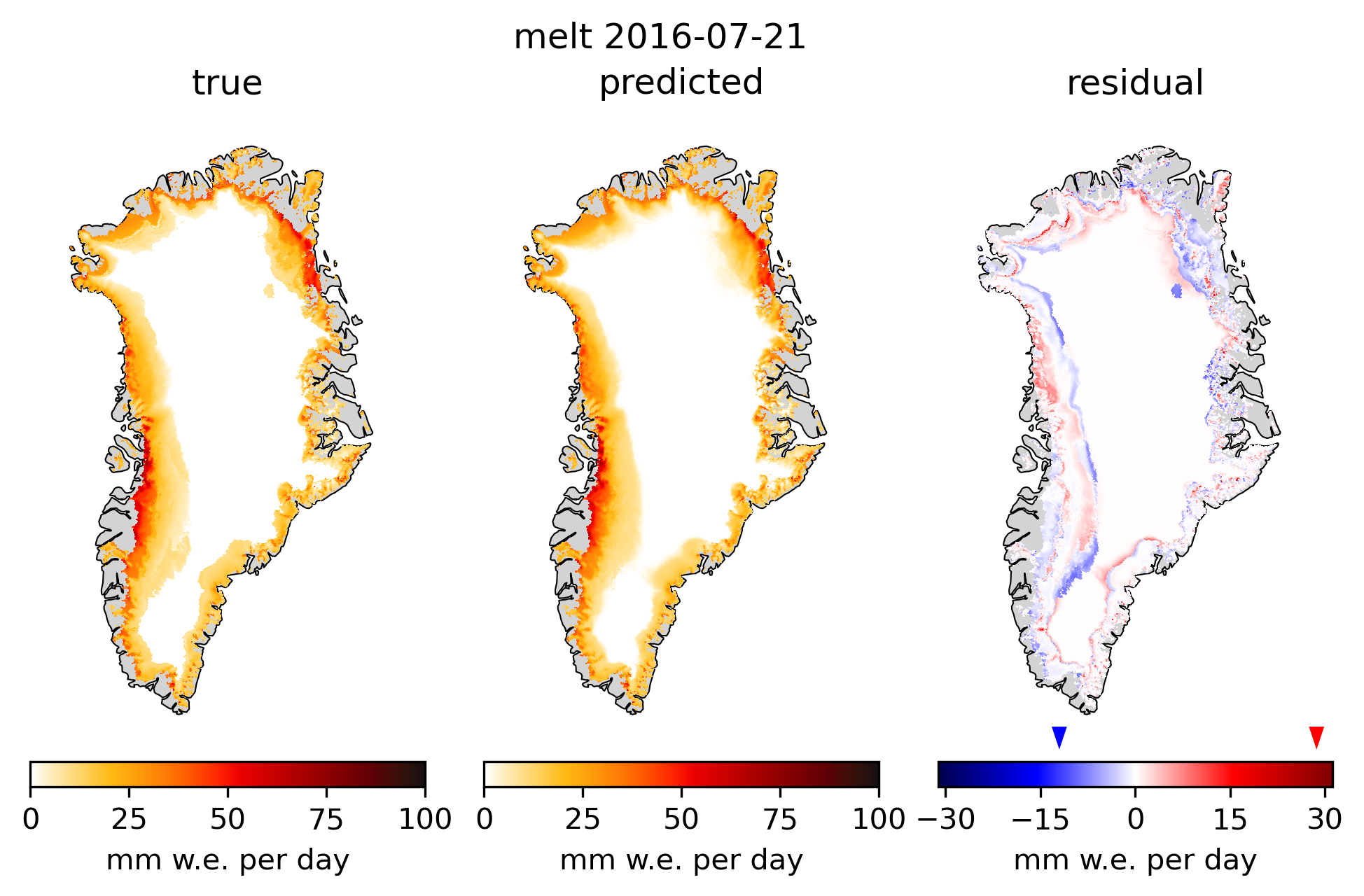
Greenland results

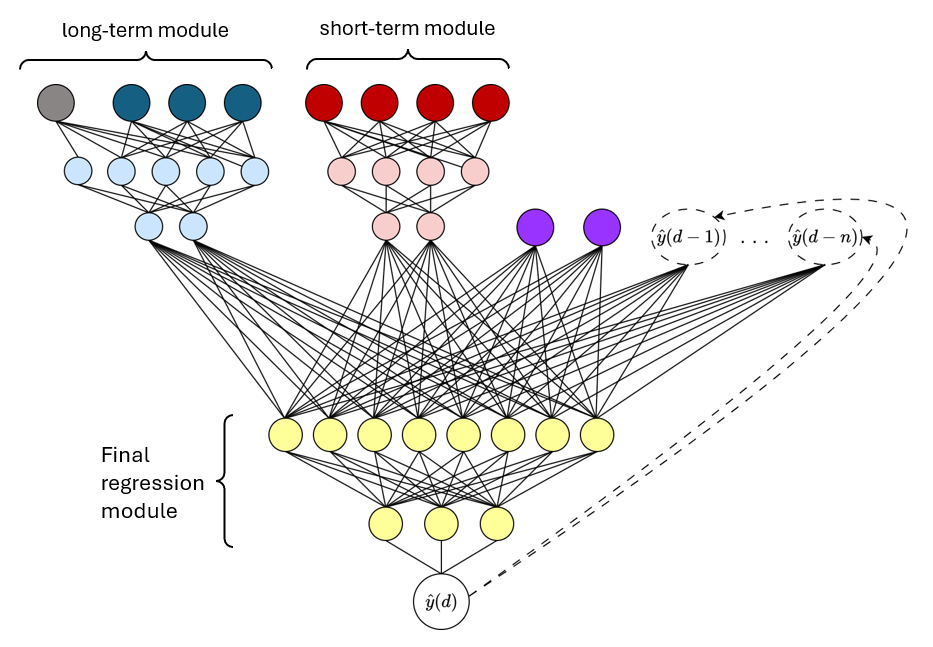
Elke Schlager, a PhD student at Aarhus University and at DMI, focuses on designing a physics-informed, modular architecture that addresses the unique temporal complexities of firn processes. 

This architecture ensures the emulator captures both the rapid response to weather events and the slow evolution of firn properties over time.


Reference

Schlager, E., Scher, S., Mottram, R. H., and Langen, P. L.: Learning to melt: Emulating Greenland surface melt from a polar RCM with machine learning, EGUsphere [preprint], https://doi.org/10.5194/egusphere-2026-7 , 2026.

Why European Weather Cloud?

Developing ML models requires extensive hyperparameter tuning. This iterative process demands substantial computing resources, particularly GPU acceleration for neural network training.

DMI leveraged the EWC to meet these computational demands.


The Impact

These polar RCM and firn emulators open new possibilities for climate science, such as uncertainty quantification using large ensembles, and surrogate modelling of ice sheet SMB in Earth System models.